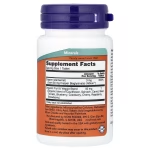
NOW Foods, Copper Glycinate, 120 Tablets


Hotline Order:
Mon - Sat: 08AM - 09PM
+923228998756
NOW Foods Copper Glycinate 3 mg – in Pakistan
A Targeted Copper Supplement with Copper Bisglycinate and a Fruit & Vegetable Blend
Copper may not receive as much attention as calcium, magnesium, zinc or iron, but it is an essential trace mineral that the body needs for several important biological functions.
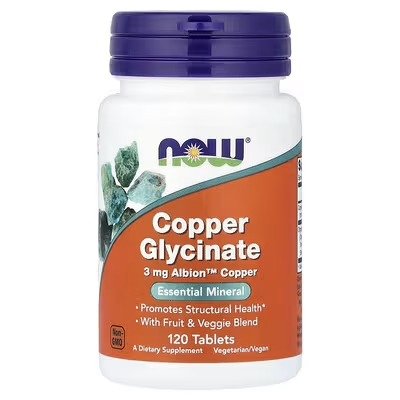
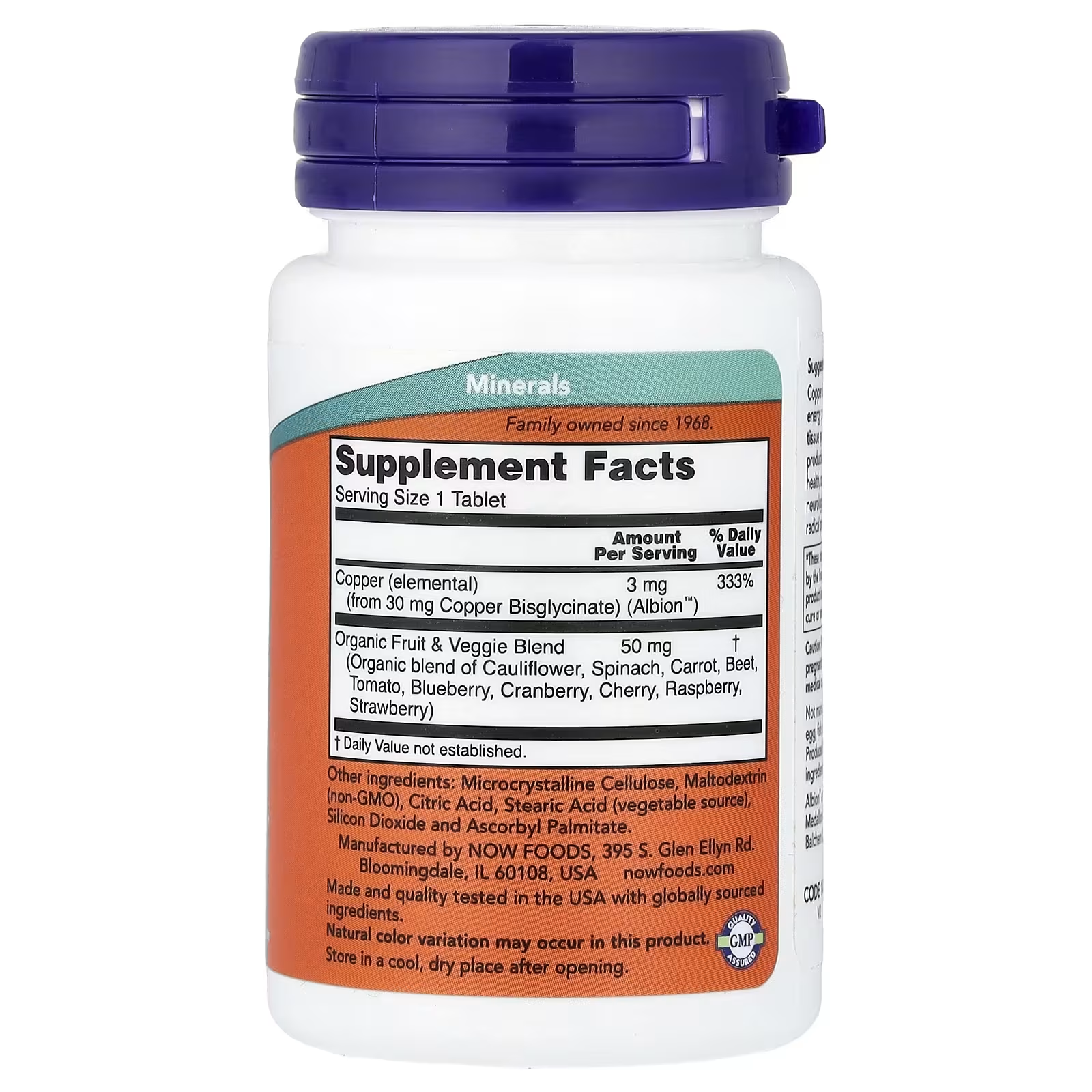
NOW Foods Copper Glycinate provides a concentrated source of elemental copper in the form of copper bisglycinate, combined with an organic fruit and vegetable blend. Each tablet supplies 3 mg of elemental copper, equivalent to 333% of the Daily Value listed by NOW Foods. The bottle contains 120 tablets, providing 120 servings when used according to the manufacturer's suggested serving of one tablet daily with a meal.
For Pakistani supplement shoppers searching for Copper Glycinate in Pakistan, copper supplements online, copper bisglycinate, or NOW Foods minerals, this product is particularly relevant because it uses a chelated copper form rather than simply listing copper as a generic mineral ingredient.
Product Details at a Glance
| Feature | Details |
|---|---|
| Brand | NOW Foods / NOW Supplements |
| Product | Copper Glycinate Tablets |
| Mineral | Copper |
| Form | Copper Bisglycinate |
| Elemental Copper | 3 mg per tablet |
| Copper source | 30 mg Copper Bisglycinate |
| Organic fruit & vegetable blend | 50 mg |
| Bottle size | 120 tablets |
| Servings | 120 |
| Suggested use | 1 tablet daily with a meal |
| Category | Mineral Supplement |
| Dietary suitability | Vegan / Vegetarian |
| Gluten | Made without gluten ingredients |
| Dairy | Dairy-free |
| Soy | Soy-free |
| Eggs | Egg-free |
| Nuts | Nut-free |
| Manufacturer location | Made and quality tested in the USA with globally sourced ingredients |
These specifications reflect NOW Foods' current product information.
Why Does the Body Need Copper?
Copper is a trace mineral, meaning the body needs it in relatively small amounts—but that does not make it unimportant.
The National Institutes of Health explains that copper is involved in making energy, connective tissues and blood vessels. It also contributes to normal nervous and immune system function and is involved in brain development and gene activation.
Copper is also involved in the metabolism and utilization of iron.
This gives copper a much broader nutritional role than the simple description of it as a “mineral supplement.”
Copper contributes to processes involving:
- Energy production
- Iron metabolism
- Connective tissue formation
- Blood vessel structure
- Nervous system function
- Immune system function
- Normal bone health
- Cellular metabolism
- Antioxidant defense mechanisms
Because copper is required in small amounts, the goal is adequate intake, not simply consuming as much as possible.
What Makes Copper Glycinate Different?
One of the most interesting aspects of this NOW Foods formula is the form of copper.
Instead of providing a simple inorganic copper compound, the product supplies elemental copper from copper bisglycinate. NOW lists 30 mg of copper bisglycinate as the source of 3 mg elemental copper.
Understanding the numbers
| Label component | Amount per tablet |
|---|---|
| Copper bisglycinate | 30 mg |
| Elemental copper | 3 mg |
| Organic fruit & vegetable blend | 50 mg |
The important number for nutritional intake is the 3 mg elemental copper.
The 30 mg figure refers to the copper-containing compound itself, while the 3 mg figure represents the actual elemental copper supplied by the serving.
This distinction is important when comparing mineral supplements online.
Copper Bisglycinate Explained
Copper bisglycinate is a form of amino-acid chelated copper.
The word “chelated” refers to the way a mineral is associated with another molecule—in this case, glycine.
Many mineral supplements are available in different chemical forms, including:
- Copper bisglycinate
- Copper gluconate
- Copper sulfate
- Cupric oxide
- Other copper amino-acid chelates
The NIH notes that copper supplements are available in several forms, including cupric oxide, cupric sulfate, copper amino acid chelates and copper gluconate. It also states that it is not known whether one form is universally better than another.
Therefore, the most accurate way to describe NOW Copper Glycinate is as a copper supplement using a bisglycinate/chelated form, rather than claiming that this form is automatically superior for every person.
The 3 mg Copper Serving: Put It Into Perspective
A common question for shoppers is:
How much copper does an adult actually need?
According to the NIH Office of Dietary Supplements, adults aged 19 years and older have a recommended daily allowance of 900 mcg of copper per day. Pregnancy increases the recommendation to 1,000 mcg, while breastfeeding increases it to 1,300 mcg.
NOW's product provides 3 mg, equivalent to 3,000 mcg, per tablet.
Copper intake comparison
| Reference | Copper amount |
|---|---|
| Adult RDA | 900 mcg/day |
| Pregnancy RDA | 1,000 mcg/day |
| Breastfeeding RDA | 1,300 mcg/day |
| NOW Copper Glycinate | 3,000 mcg/tablet |
| Adult tolerable upper intake level | 10,000 mcg/day |
The upper limit includes copper from food, beverages and supplements, not just the supplement itself.
This is why this product should be viewed as a high-potency copper supplement, not as an everyday replacement for dietary copper.
A Useful Mineral Relationship: Copper and Zinc
Copper becomes particularly interesting when looking at zinc supplementation.
Zinc is another essential mineral, and high amounts of supplemental zinc can interfere with copper absorption and potentially contribute to copper deficiency. The NIH specifically identifies people taking high doses of zinc supplements as one group more likely to have difficulty getting enough copper.
This does not mean everyone taking zinc needs a copper supplement.
Instead, it highlights why mineral supplementation should be considered as a complete picture.
Think of it this way:
Zinc supplement → overall mineral intake → copper balance
If someone is taking a high-dose zinc product for an extended period, it may be worth discussing overall mineral intake with a healthcare professional rather than simply adding copper independently.
Copper + Zinc: Should You Take Both?
There is no universal answer.
Some supplement formulas intentionally combine zinc and copper. Other people prefer taking individual minerals separately so they can control their intake more precisely.
| Approach | Advantage |
|---|---|
| Copper alone | Targeted copper supplementation |
| Zinc alone | Targeted zinc supplementation |
| Zinc + copper formula | Convenient combined mineral approach |
| Multivitamin/mineral | Broader nutritional coverage |
NOW Copper Glycinate is useful for consumers who specifically want standalone copper rather than a combined mineral product.
If your existing multivitamin already contains copper, however, adding another copper supplement may not be necessary.
What's in the Fruit & Vegetable Blend?
NOW also includes a 50 mg organic fruit and vegetable blend in this formula.
The blend includes:
- Cauliflower
- Spinach
- Carrot
- Beet
- Tomato
- Blueberry
- Cranberry
- Cherry
- Raspberry
- Strawberry
This blend is not the primary source of the product's copper. The principal mineral ingredient is copper supplied from copper bisglycinate.
That distinction is useful because shoppers sometimes assume every ingredient contributes equally to the main nutritional purpose of the supplement.
Here, the formula is fundamentally a copper mineral supplement with an additional plant blend.
Ingredient Breakdown
1. Copper – 3 mg
The main nutritional ingredient.
Copper contributes to normal energy production, connective tissue formation, iron metabolism, nervous system function and immune function.
2. Copper Bisglycinate – 30 mg source compound
This is the source compound from which the product supplies its 3 mg of elemental copper.
3. Organic Fruit & Vegetable Blend – 50 mg
A mixture of organic vegetables and fruits, including spinach, carrot, beet, tomato, berries and other plant ingredients.
Other ingredients
The current NOW label lists:
- Microcrystalline cellulose
- Maltodextrin (non-GMO)
- Citric acid
- Stearic acid from vegetable source
- Silicon dioxide
- Ascorbyl palmitate
The product is not manufactured with wheat, gluten, soy, milk, egg, fish, shellfish, tree nuts or sesame ingredients, although it is made in a GMP facility that processes other allergen-containing ingredients.
How to Take NOW Copper Glycinate
NOW Foods' current directions are simple:
Take 1 tablet daily with a meal.
Simple dosage chart
| Usage | Amount |
|---|---|
| Serving size | 1 tablet |
| Copper per serving | 3 mg |
| Servings per bottle | 120 |
| Suggested frequency | Once daily |
| Timing | With a meal |
Do not assume that taking two or three tablets will provide greater nutritional benefits.
Because copper is a mineral for which excessive intake can be harmful, follow the product label or individualized advice from a qualified healthcare professional.
Copper-Rich Foods You Can Find in a Balanced Diet
A supplement is not the only way to obtain copper.
The NIH lists a range of copper-containing foods, including:
- Beef liver
- Shellfish such as oysters
- Cashews
- Sesame seeds
- Sunflower seeds
- Chocolate
- Whole-grain products
- Potatoes
- Mushrooms
- Avocados
- Chickpeas
- Tofu
For Pakistani consumers, foods such as chickpeas, seeds, nuts, potatoes and whole-grain foods can be incorporated into a varied diet.
The amount of copper obtained from food varies depending on the food, serving size and overall dietary pattern.
Copper Supplement vs Multivitamin
Which is better?
It depends on the reason for supplementing.
| Feature | NOW Copper Glycinate | Multivitamin |
|---|---|---|
| Copper | 3 mg | Usually lower, varies |
| Other vitamins | No | Yes |
| Other minerals | No | Usually |
| Fruit & vegetable blend | Yes | Depends on formula |
| Targeted copper intake | Yes | No |
| Formula complexity | Focused | Broad |
| Best for | Targeted copper supplementation | General nutritional coverage |
If your goal is simply to cover basic nutritional requirements, a multivitamin may already provide copper.
If a person specifically needs additional copper, a standalone product provides more control—but because this product contains a relatively high 3 mg serving, it should not be added casually.
Who Might Consider NOW Copper Glycinate?
This product may be relevant to adults who:
- Want a standalone copper supplement
- Prefer copper bisglycinate
- Are looking for a mineral supplement from NOW Foods
- Want a vegan/vegetarian mineral product
- Are already managing their zinc and copper intake
- Want a clearly labeled 3 mg elemental copper serving
- Prefer tablets rather than capsules
However, not everyone needs supplemental copper.
Most people can obtain copper from a varied diet, and the NIH notes that most people get enough copper from food.
Buying Copper Glycinate in Pakistan
When searching for NOW Foods Copper Glycinate in Pakistan, shoppers should compare more than the product name.
Check the following:
Authenticity
Look for a reputable supplement seller and intact packaging.
Elemental copper amount
Make sure the listing clearly identifies the 3 mg elemental copper per tablet rather than confusing it with the 30 mg copper bisglycinate source compound.
Tablet count
The current NOW listing identifies this product as 120 tablets / 120 servings.
Expiry
Always check the expiry or best-before information.
Storage
NOW recommends storing the product in a cool, dry place after opening.
Existing supplements
Review your multivitamin, zinc, mineral complex and other supplements before adding standalone copper.
Add your review
Your email address will not be published. Required fields are marked *
Please login to write review!
Looks like there are no reviews yet.