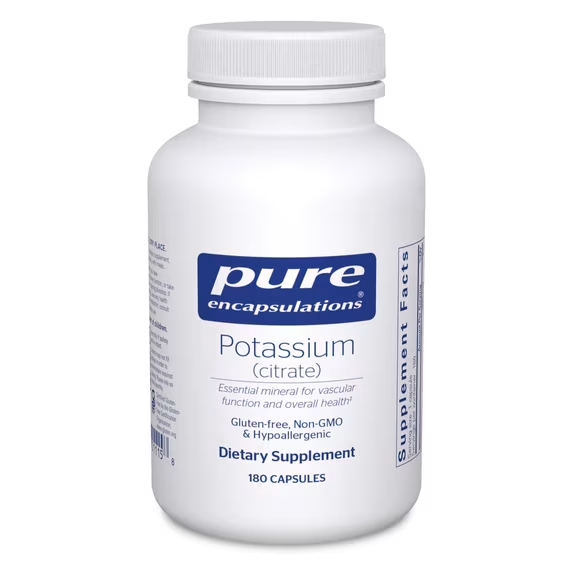

Pure Encapsulations Potassium Citrate Capsules


Hotline Order:
Mon - Sat: 08AM - 09PM
+923228998756
Pure Encapsulations Potassium Citrate 200 mg Capsules in Pakistan
Potassium is an essential mineral involved in several important functions throughout the body. It helps maintain normal muscle activity, supports nerve signal transmission, contributes to fluid balance and plays a role in maintaining a steady heart rhythm. Because the body cannot produce potassium on its own, it must come from food or appropriate supplementation.
Pure Encapsulations Potassium Citrate provides potassium in the citrate form, with each capsule supplying 200 mg of elemental potassium according to the US product label. This formula is designed for adults looking to supplement their dietary potassium intake as part of a balanced nutrition and wellness routine.
For customers in Pakistan who are exploring specialist mineral supplements, this product offers a clearly identified potassium source in a convenient capsule format. It may be considered when dietary intake is insufficient or when a healthcare professional recommends additional potassium. It is not a replacement for a balanced diet or medical treatment.
What Is Potassium Citrate?
Potassium citrate is a compound made from potassium and citric acid. It supplies potassium, an electrolyte that helps regulate the movement of fluids and electrical signals in the body.
Electrolytes are minerals that carry an electrical charge when dissolved in body fluids. They are important for communication between nerves and muscles, fluid regulation and normal cardiovascular activity.
Potassium is especially important because much of the body's potassium is found inside cells. It works alongside sodium to help maintain the balance of fluids inside and outside cells. This balance supports normal muscle contractions, nerve function and heart activity.
Potassium citrate is one of several forms used in nutritional supplements. The citrate form provides potassium in a capsule rather than requiring it to come exclusively from food sources.
Key Nutritional Benefits of Potassium
1. Supports Normal Muscle Function
Potassium is necessary for normal muscle contraction and relaxation. Muscles rely on electrical signals to coordinate movement, and potassium helps maintain the electrical conditions required for these signals.
Adequate potassium intake is important for everyday activities such as walking, exercising and performing routine physical tasks. Potassium deficiency can affect normal muscle function, although muscle symptoms can have many different causes.
2. Helps Maintain Normal Nerve Function
Nerve cells use differences in potassium and sodium concentrations to transmit electrical impulses. These signals allow the brain and nervous system to communicate with different parts of the body.
Maintaining adequate potassium intake supports the normal functioning of this communication system.
3. Contributes to Fluid and Electrolyte Balance
Potassium works together with sodium to help regulate fluid distribution within the body. This balance is important for normal cellular activity and the functioning of different tissues.
People lose electrolytes through sweat and other normal bodily processes. A varied diet helps replace these nutrients, while supplementation may be appropriate in selected circumstances under professional guidance.
4. Supports Normal Cardiovascular Function
The heart is a muscle that depends on electrical signals to maintain its rhythm. Potassium is involved in the electrical activity of heart cells and contributes to normal heart function.
Both insufficient and excessive potassium can be harmful. Taking additional potassium does not automatically improve heart health, and people with cardiovascular or kidney conditions should seek medical advice before using a potassium supplement.
5. Helps Maintain Normal Blood Pressure
Potassium is involved in the body's relationship with sodium and fluid balance. Adequate potassium intake from food is associated with healthy blood pressure regulation as part of an overall balanced diet.
A potassium supplement should not be considered a treatment for high blood pressure. Anyone taking blood pressure medication should consult a healthcare professional before adding potassium.
Pure Encapsulations Potassium Citrate Ingredients
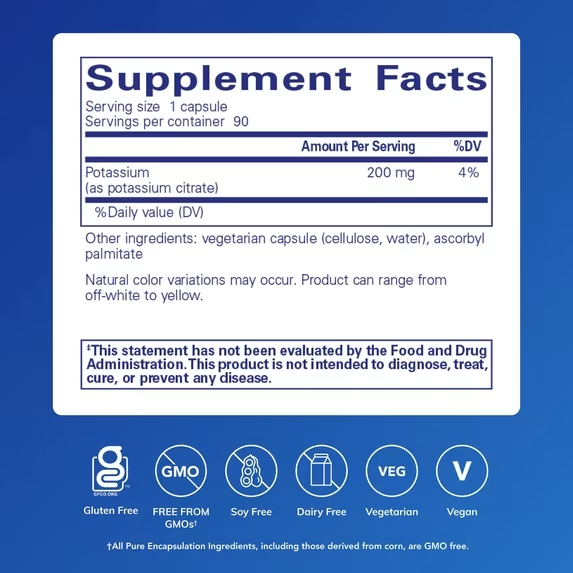
The US product information identifies potassium citrate as the source of the active mineral. The capsule also contains a small number of additional ingredients.
| Ingredient | Purpose |
|---|---|
| Potassium (as potassium citrate) | Supplies elemental potassium |
| Vegetarian capsule (cellulose and water) | Forms the capsule shell |
| Ascorbyl palmitate | Additional formulation ingredient |
The formula is described in the US product information as gluten-free and non-GMO. Check the actual bottle for the claims and ingredient declaration applicable to your specific market and batch.
Supplement Facts
The following information is based on the US 200 mg formulation.
| Supplement information | Details |
|---|---|
| Brand | Pure Encapsulations |
| Product | Potassium (Citrate) |
| Serving size | 1 capsule |
| Potassium per capsule | 200 mg |
| Potassium source | Potassium citrate |
| Dosage form | Vegetarian capsule |
| Available US bottle quantity | 90 or 180 capsules, depending on SKU |
Please verify the bottle size and label before publishing a particular pack quantity. Product formulations and regional packaging may differ.
Suggested Use and Dosage Information
The US product label recommends taking 1 capsule, 1–2 times daily, with meals. The appropriate amount depends on dietary intake, individual health status, kidney function, medications and professional advice.
| Label-based daily amount | Potassium supplied |
|---|---|
| 1 capsule | 200 mg |
| 2 capsules | 400 mg |
These figures show the amount supplied by the capsules, not the total potassium a person needs each day. Do not increase the serving simply because a higher amount is shown in the table.
Potassium safety matters: People with kidney impairment or elevated blood potassium must not use this product unless specifically directed by their healthcare professional. The product label warns against use in people with hyperkalemia or abnormal kidney function and those taking ACE inhibitors or potassium-sparing diuretics.
Potassium Citrate Compared with Other Potassium Sources
Different potassium compounds are used in supplements and medical products. They are not automatically interchangeable for every purpose.
| Potassium form | General description |
|---|---|
| Potassium citrate | Potassium combined with citric acid; used in nutritional supplements and certain medical settings |
| Potassium chloride | A common potassium salt used in some supplements and electrolyte products |
| Potassium gluconate | Another potassium compound used in nutritional supplements |
| Potassium from food | Naturally present in foods such as potatoes, beans, vegetables and fruit |
Pure Encapsulations Potassium Citrate provides potassium in the citrate form. The best form depends on why potassium is being used, the amount required and the advice of a healthcare professional.
Important distinction: Potassium citrate supplements should not be confused with prescription potassium citrate products used for specific urinary or kidney-stone conditions. The amounts and treatment instructions can be different. Do not use this dietary supplement as a substitute for prescribed treatment.
Natural Potassium Sources in Pakistani Foods
A balanced diet can provide potassium through everyday foods commonly available in Pakistan. Some useful sources include:
- Bananas: A familiar fruit that contributes potassium to daily meals.
- Potatoes: Particularly useful when prepared without excessive added salt.
- Spinach and other leafy vegetables: Provide potassium along with other nutrients.
- Daal and lentils: Affordable sources of plant-based nutrition.
- Chickpeas and beans: Add potassium, fibre and plant protein to meals.
- Yoghurt: Provides potassium along with calcium and protein.
- Tomatoes: Can contribute potassium in salads, curries and cooked dishes.
- Oranges and other fruits: Add potassium as part of a varied diet.
Food sources should remain the foundation of everyday nutrition unless a clinician recommends otherwise. People with kidney disease may need an individualized potassium intake, so even high-potassium foods should be discussed with their healthcare team when dietary restrictions apply.
Who May Consider This Supplement?
Pure Encapsulations Potassium Citrate may be considered by adults who:
- Have been advised by a healthcare professional to supplement potassium.
- Need a convenient capsule format for a prescribed or recommended nutrition plan.
- Want to understand their potassium intake alongside their overall mineral nutrition.
- Are looking for a potassium supplement with potassium citrate as its identified source.
It is not suitable for everyone. People with kidney problems, high blood potassium, certain heart conditions or medication-related potassium risks should obtain medical advice before use.
Important Precautions and Possible Interactions
Potassium is essential, but too much potassium in the blood can be dangerous. This condition is known as hyperkalemia. It may occur when the kidneys cannot remove excess potassium effectively or when certain medicines increase potassium levels.
Consult a healthcare professional before using this supplement if you:
- Have kidney disease, reduced kidney function or a history of high potassium.
- Take ACE inhibitors or angiotensin receptor blockers (ARBs).
- Take potassium-sparing diuretics such as spironolactone, eplerenone or amiloride.
- Use other potassium supplements or potassium-containing salt substitutes.
- Have a heart condition or take medication that can affect potassium levels.
- Are pregnant, breastfeeding or taking regular prescription medication.
Do not use potassium supplementation to self-treat cramps, weakness, palpitations or suspected electrolyte imbalance. These symptoms can have different causes and may require medical assessment. Seek urgent medical attention for severe weakness, chest discomfort, fainting or an abnormal heartbeat.
Why Choose Pure Encapsulations Potassium Citrate?
Pure Encapsulations offers a focused mineral formula with potassium supplied as potassium citrate. The US label identifies 200 mg of potassium per capsule, making the product information straightforward to review when comparing potassium supplements.
For shoppers in Pakistan, it is important to check the original packaging, serving size, ingredient panel, expiry date and safety seal before purchasing. The product should be stored in a cool, dry place and kept out of children's reach.
Choose a product based on your nutritional needs and professional advice rather than assuming that a higher potassium intake is always better.
Add your review
Your email address will not be published. Required fields are marked *
Please login to write review!
Looks like there are no reviews yet.